Commercial Waste Removal in Kilburn
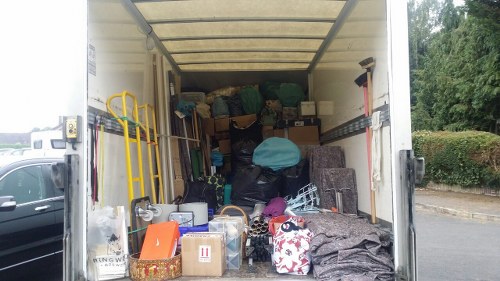
Commercial waste removal in Kilburn supports shops, offices, studios, landlords and managed premises that need regular or one-off clearance of mixed business rubbish. We handle practical collections of everyday trade waste, bulky items and recyclable material, with an approach that aims to keep the process orderly from the first enquiry to the final load. For customers comparing options, clear sorting, sensible scheduling and responsible disposal are usually as important as the collection itself.
Our service is designed around the different waste streams a business can produce. That may include office furniture, packaging, redundant equipment, display fixtures, light refurbishment debris or general refuse from a premises clean-out. Where items can be separated for reuse or recycling, we do that where suitable. Where disposal is required, we move material away efficiently and leave the space ready for its next use. If you need a straightforward place to begin, start with the type of waste and the access conditions.
Because commercial clearances can vary from tidy back-of-house collections to larger mixed loads, it helps to think in practical terms before arranging the work. A useful brief usually includes the item types, approximate volume, building access, parking restrictions and any time limits imposed by the property. That information allows the collection to be matched to the job, whether you are clearing a single floor, a storeroom or several sections of a business premises. Check pricing and quotes if you want to compare the likely scope before you proceed.
Business waste collections for workplaces and premises
We provide collections for a wide range of commercial settings in Kilburn, including offices, retail units, salons, workshops and light industrial spaces. The work often involves mixed waste rather than a single material stream, so the collection plan needs to account for packaging, obsolete stock, broken fixtures and office contents all in one load. In practice, that means we focus on keeping separable items together and moving the rest out in a controlled way.
For many businesses, the biggest advantage is being able to clear space without interrupting the day more than necessary. Collections can be arranged around opening hours, stock movement or staff access, so the removal fits the way the premises operate. If you are preparing for a refit, end-of-tenancy change or stockroom reset, it may help to identify what should stay, what should be reused and what can go before the collection begins. You can then request a quotation with a clearer picture of the load. Request a quotation when you are ready to discuss the details.
Typical commercial waste types
Business waste is not always limited to paper and packaging. Depending on the premises, it may also include shelving, chairs, desks, counters, filing units, waste from small fit-outs and occasional electrical items. We treat those items as part of a planned collection rather than as loose debris, which helps reduce confusion on the day. If the load contains a few different categories, we can discuss the best way to organise them so that the collection remains orderly and practical.
Office clearances and furniture removal
Office clearance work often starts with bulky furniture and ends with smaller contents that have built up over time. Desks, chairs, storage units, shelving, monitors, printers and assorted back-office items can all take up valuable room when a workplace is reconfigured or downsized. Our office waste removal service is intended to remove those items without creating unnecessary disruption for staff, visitors or neighbouring units.
Where an office is being emptied room by room, it is usually sensible to separate categories before the collection date. That can include keeping archive material apart from furniture, identifying reusable items and making sure anything confidential is handled appropriately. A concise list of what needs removing will help us plan the work and determine whether the load is straightforward or more involved. If you are still comparing options, make a note of access, lift use and any loading restrictions so the quotation reflects the real job. See office clearance details for a closer look at this service.
We also deal with furniture that is awkward to move because of size or condition. Large cabinets, meeting tables and worn office seating can all require careful handling to avoid damage to walls, floors or door frames. Where items are suitable for recycling or component recovery, we look to separate them sensibly. If you are planning a broader clear-out, view furniture clearance to see how stand-alone furniture can be grouped with the rest of the work.
Bulky item disposal from commercial properties
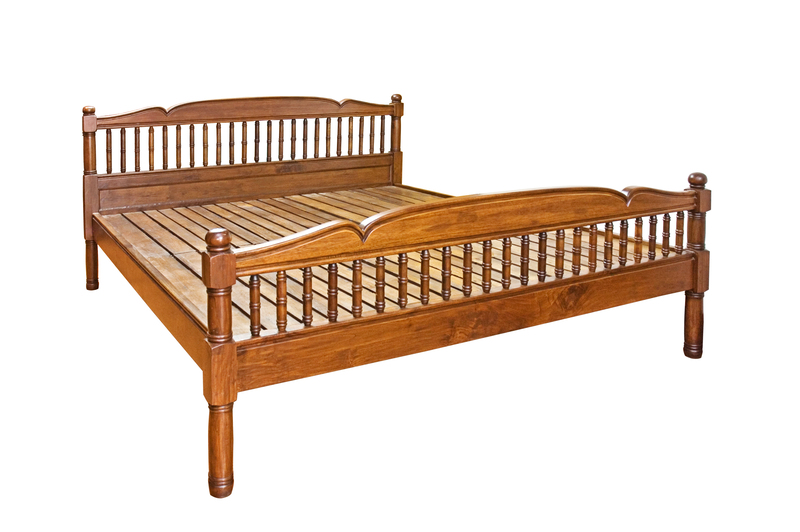
Some business loads are dominated by single bulky items rather than a full clearance. This can apply to a broken reception sofa, an old fridge in a staff area, a tired mattress from short-stay accommodation or a heavy unit that no longer suits the premises. Our furniture disposal and appliance removal work is set up for these kinds of practical, one-off jobs, where removal needs to be done cleanly and without wasting time.
Bulky waste is easiest to manage when there is enough information to judge weight, size and movement through the building. Narrow corridors, stair access and tight loading areas can all affect how a job is carried out. If there are any obstacles, it is better to mention them early rather than on the day. That way the collection can be arranged with the right approach. For larger items that have to come from a storage area or upper floor, good route planning matters as much as the lifting itself. Read about mattress and sofa disposal if your load includes that kind of item.
When commercial furniture becomes outdated, damaged or no longer suitable for the site, removal is often only one part of the process. The surrounding area may also need a clear-down so that replacement furniture or new stock can be brought in. In those cases, the collection is best treated as part of a wider space reset rather than as a simple pick-up. Learn more about furniture disposal if you want to separate that work from a general waste load.
Clearances for homes, flats and mixed-use premises

Although this page focuses on commercial waste removal, some customers also need linked clearance work at properties that combine living and business space. That can include flats above shops, managed apartments with small work areas or homes used partly for business storage. For those situations, it helps to keep the service line clear: house clearance and flat clearance are designed for property contents, while commercial collections deal with business waste, mixed rubbish and bulky items from premises.
Where a property includes both domestic and business material, the practical decision is often about how the load should be separated. Mixed contents may need to be divided into furniture, packaging, papers and general rubbish before collection. This is especially useful where a landlord, tenant or managing agent wants the clearance to be completed with minimal confusion. If you need a broader property tidy-up alongside business waste removal, look at flat clearance or view house clearance to see how those services are structured.
For lofts, garages and stored overflow items, the same principle applies. Items that have been left for years are often less about a single large load and more about a mixture of obsolete furnishings, boxes, broken household goods and paperwork. Separating them in advance can save time during the collection and help ensure the right items are taken. If the premises includes storage spaces as well as a commercial area, describe each zone clearly in your enquiry so the quotation matches the actual work. See garage clearance if that is part of the job.
What a commercial collection can include
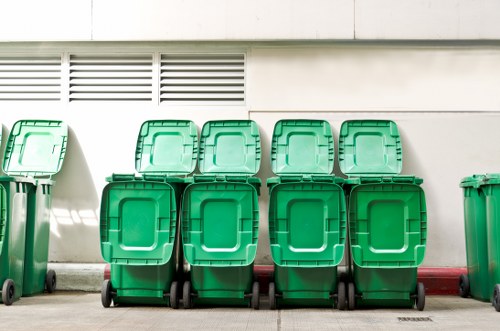
Commercial waste removal is broad enough to cover routine refuse, bulky waste and items left behind after a change of use. In a single job, that might mean cardboard, packaging, redundant stock, display units, staff-room furniture, broken shelving and a few loose bags of general waste. The value of a planned collection is that the load is handled as one organised removal rather than a series of separate disposal problems.
It can also help to think through what should not be mixed into the main pile. Confidential papers, specialist waste, hazardous materials and some electrical items may require separate handling or a different collection route. If you are unsure whether something belongs in the commercial load, it is better to identify it early so that the waste stream is not confused. This is where a brief written list can be useful, especially for businesses with multiple departments or storage areas. Read about confidential shredding if paperwork is part of the clearance.
Some collections are straightforward because the waste is already gathered in one place. Others need a bit more sorting before removal begins. Either way, the aim is the same: to move business waste out efficiently while keeping the premises safe and usable. If your job includes mixed materials from a refit or stockroom clear-out, ask for the service that fits the heaviest and most awkward items first, then the smaller material can be judged around that. See builders waste clearance for debris from refurbishment and light construction work.
Preparing a quotation and planning access
A good quotation begins with accurate information. We usually need to know what type of waste is involved, roughly how much there is, whether the items are bagged or loose, and how the property can be accessed. For larger business clearances, photographs or a short item list can make the description much clearer, especially if several rooms or storage areas are involved. The more precise the brief, the easier it is to match the collection to the task.
Access details matter because they can affect the way the collection is organised. Loading bays, staircases, lifts, timed entry, narrow corridors and controlled parking can all change the amount of time needed on site. Where there are restrictions, it is sensible to mention them when you ask for a quote so there are no surprises later. You do not need to write a long explanation; a short summary is usually enough if it covers the practical points. Simple details often lead to better planning. Book online if you already know what needs removing and want to move ahead.
Once the basic information is clear, the collection can be shaped around the premises and the waste itself. That might mean a single visit for a modest load or a more carefully staged clearance for larger premises. If you want to compare how different jobs are handled, learn more about the company before you decide how to proceed. For straightforward pricing questions, see pricing and quotes again and use it alongside your own item list.
Recycling, sorting and responsible disposal

Responsible commercial waste removal is not only about taking rubbish away. It also involves deciding what can be separated for recycling, what should stay together for safe handling and what needs specialist treatment. Office paper, cardboard, furniture components and some metal items may all follow different routes depending on their condition and material makeup. Keeping the load organised at collection stage supports that process.
For businesses, this approach is useful because it makes waste management more consistent. When mixed items are thrown together indiscriminately, there is more chance that recoverable material will be lost among general rubbish. When the waste is divided sensibly, the collection becomes easier to manage and the disposal route can be more appropriate to the contents. If your premises produces recurring waste, it can help to plan the next load with that in mind rather than treating every collection as an isolated event. Read about recycling and sustainability if you want to understand that side of the service.
Some items need extra care because they are awkward, delicate or no longer functional. Fridges, appliances, worn seating and office equipment all benefit from being identified early, especially if the load also contains general refuse. This avoids confusion on the day and helps the collection proceed in the right order. If you have items that need a separate disposal route, group them in your notes by type and location so nothing is missed. See fridge and appliance removal for those particular items.
About Kilburn
Kilburn is an area in northwest London that sits across parts of the London Borough of Camden and the City of Westminster, with the road and rail corridor of Kilburn High Road forming one of its best-known lines of movement. The name is used for both a wider district and a smaller neighbourhood identity, and the area has long been shaped by its position between inner London centres. The High Road itself developed as a busy thoroughfare with shops, services and transport links, while surrounding streets retain a mix of residential terraces, mansion blocks and later infill development. Nearby stations and bus routes have helped the district remain closely connected to the rest of the capital, and this accessibility has been part of its character for generations.
Architecturally, Kilburn shows the layered history of London growth. Victorian and Edwardian housing sits alongside post-war buildings and modern developments, with church spires, civic structures and commercial frontages adding variety to the street scene. The area is also associated with several recognised landmarks and cultural venues. Kilburn Grange Park offers open green space within the district, while the nearby Abbey Road and Maida Vale edges contribute to the local geography that many people recognise. Kilburn is linked to a wider Irish cultural history in London, and that heritage can still be traced through the names of pubs, halls and community references found in the area. The result is a place that combines everyday urban activity with a distinctive local identity, shaped by transport, housing, commerce and long-standing neighbourhood change.
Household-style clearances that overlap with business premises

Not every clearance on a commercial site is purely office-based. Some jobs involve household-style contents from mixed-use buildings, letting periods or storage rooms that have accumulated domestic items over time. In those cases, the clearance may include sofas, beds, wardrobes, kitchen items and assorted furniture alongside work-related waste. A clear distinction between domestic contents and business refuse helps decide how the load should be organised and what should be removed together.
This is where it can be helpful to think of the work in categories. Household contents may be better suited to house clearance, flat clearance or loft clearance, while stock, packaging and equipment remain part of the commercial waste job. If the same premises has both kinds of waste, the collection can often be arranged so that each category is handled appropriately without making the process unnecessarily complicated. For items stored above ground level or tucked into corners, mention the access conditions and any restrictions early in the conversation. View loft clearance if hidden storage is part of the task.
Where waste is spread across several rooms or levels, a practical plan is often more important than a long list of separate instructions. A short summary of what is in each area, which items are heavy and which items must stay put will usually be enough to guide the work. If you are ready to discuss a collection in Kilburn, the simplest next step is to outline the load and ask for a quotation. Request a quotation when you want the removal arranged.